Showing posts with label myths. Show all posts

Wednesday, April 15, 2009

March Letter to the Editor I wrote in response to another ridiculous opinion piece.

I’m a little late in posting this but… oh well.

So there was a letter to the editor that came out in my local paper (Langley Advance) at the end of March in criticism of STV. It was full of the usual half truths and deceptive argumentation that has become the bread and butter for the No camp. So I decided to write a letter in response. Interestingly enough, I had put the link to my blog at the end of my letter but it wasn’t included when it was actually published. I found it curious as the editor has made no secret of his complete and utter disdain for BC-STV and the Citizen’s Assembly (he’s actually a snotty prick about it). Anyways, below is the letter and I’ve put my responses in red under the pertinent points.

STV system not that simple

Dear Editor,

After re-reading the technical report of December 2004, published by the Citizen's Assembly, entitled Making Every Vote Count - the Case for Electoral Reform in British Columbia, here are some comments for voters' consideration in the forthcoming second round:

Elections: Politicians don't like STV

Dear Editor,

Some of D.B. Anderson's points [STV system not that simple, Mar. 20 Letters, Langley Advance] need to be clarified.


1. Be careful what you wish for.

2. Gordon Gibson and other proponents of STV keep saying that, if the Irish can do it, so can we. However, page 11 of the report says, "The Irish government has twice tried to use referendums to abolish STV." Did the reform attempts fail, as they have in Italy and Israel, as to their fractured Proportional Voting Systems, because it takes 60 per cent approval to be rid of these things?

While there were two referendums in Ireland to abolish STV, they did not fail because of a required 60 per cent threshold. They failed because the Irish voted to keep STV, 52 per cent in the first referendum and 61 per cent in the second.

The Irish referendums to change from STV were initiated by politicians and rejected by citizens, while the B.C. referendum was to change to STV, and was initiated by citizens and campaigned against by politicians and political insiders.


3. How many voters in 2005 knew the assembly's ballot question meant that, with STV, you get multi-member ridings? For suburban ridings, they recommend as many as seven MLAs. The logic has never emerged, and there could be dozens of names on the ballot. While B.C. has had two-member ridings in the past, it means MLAs must spread their time and energy over all of the riding's communities, instead of a few.

Under BC-STV, there will only be one riding with seven MLAs; the majority will have four. This is because multi-member ridings provide more accurate and proportional election results. And there will not be dozens of names on the ballot. Based on sample ballots from Ireland, there will be around eight to 16, which is hardly overwhelming.

4. Although the 2005 vote was 55-58 per cent yes province-wide, with two ridings dissenting, 60 per cent of voters later polled said they voted yes even though they did not understand the issue.

The fact that 60 per cent of voters voted yes in the 2005 vote without understanding the issue only tells half the story. What we do know is that, when voters do understand STV, approval goes up to around 80 per cent. So the fact that STV missed passing the ridiculously high 60 per cent threshold is simply due to people not being fully informed.

This is why people should be taking the time to educate themselves on this extremely important issue.


5. How many have heard of the Droop quota and the weighted Gregory method? Well, those are formulae used to count the ballots in this system that the advocates always say is "simple." Look it up.

Droop decides who wins a seat outright. It divides the total votes in a riding by the number of MLAs to be elected, plus one, then adds one.

In a single MLA riding, the result would be total votes over, plus one plus one plus one. The result is 50 per cent plus one wins the seat - the same as at present, when only two people run.

But once you have multi-members, the percentage needed to win drops dramatically. If three MLAs are to be elected, Droop dictates that the total votes are divided by three, plus one. Then 25 per cent wins a seat. How is this more democratic than our current, first-past-the-post system?

Next, the Gregory method calculates what fraction of surplus votes goes to your second, third, etc. choices.

It is the surplus votes cast for an elected MLA over the total votes received by that MLA. Rarely will a whole vote be transferred, as some think. It'll be a fraction - a tiny one.

Wait. It gets even "simpler."

If there are still surplus choices, that MLA's fraction can be multiplied by another MLA's fraction to give an even smaller one. Our vote can count - and count - and count.

The Droop quota decides how much a candidate needs to win a majority of the vote; it's 50 per cent plus one in a single-member riding.

The percentage goes down in multi-member ridings, because the ridings are bigger, with more voters. The actual number of votes a candidate needs to win remains roughly the same. The Gregory method determines the fraction or percentage of a vote that gets transferred from an elected candidate to remaining candidates. So if a candidate has 10 per cent more votes than needed to win, all of those candidates' votes get transferred to the next choice that's listed, at a value of 10 per cent. It's a different concept, but by no means complicated.

The principles underlying STV are actually very logical and simple.


6. So who does this counting? At present, even the most unsophisticated poll clerk or scrutineer can count our Xs. STV will certainly require that we trust contracted nerds with costly high-technology to count and report.

The media will be shut out. No more CBC predictions.

STV will use paper ballots, just as we use now. Just like in the Vancouver city elections, scanners will probably be used to speed up the count, but the ballots can be counted by hand, if needed.

Ireland has managed for 80 years; I'm sure they can give us one or two pointers.


Always glad to be of help.

D.B. Anderson,

Brookswood

STV is not perfect, but it is better than our current system, which is badly flawed.

Regardless, there are no good reasons to not at least try it out. It's always a lot easier to change back to our current system, and you can bet it would be with the full support and blessing of our politicians.

Clifford Thai, Walnut Grove

Wednesday, February 25, 2009

Clearing The Mists: A Response To A David Schreck Essay

David Schreck is the secretary-treasurer for the No Side and has his own website dedicated to criticizing BC-STV. He’s written, and is writing, several esays on the topic; but I’m choosing this one because it’s a good example of the usage of straw man arguments which are "based on misrepresentation of an opponent's position. To ‘set up a straw man,’ one describes a position that superficially resembles an opponent's actual view, yet is easier to refute." (wiki).

The first example is in the fourth paragraph:
Since WWII BC has elected majority governments. In Ireland, one party, Fianna Fáil, has formed the government in all but 19 years since 1932, as a majority government until 1989 and as the major party in coalition governments since 1989. It is currently government in coalition with the Greens; it's last partner losing 6 of 8 seats in the 2007 election. STV was used as the voting system since 1922, so contrary to what supporters of STV say, it is hard to conclude STV keeps one party from dominating politics.
Mr. Schreck is misrepresenting the purposes of an electoral system. It’s not the job of an electoral system to ensure that certain parties do or don’t get elected; that’s up to the voters. What an electoral system should do is ensure that the results of an election accurately reflect the preferences of the voters, according to the votes they cast. STV does that very well, our current system does this very poorly. If they want one party to form successive governments, like in Ireland, they should get that. If they only want representation from two parties in parliament, like in Malta, they should get that. If they want representation from smaller parties, like in both Ireland and BC, then they should get that too. So contrary to what Mr. Schreck says, STV supporters are not claiming that STV keeps one party from dominating politics; we’re saying that STV gives more accurate and fair election results than our current first-past-the-post (FPTP)system.

Moving on to paragraph seven, Mr. Schreck discusses the number of candidates parties will run:
In the May 17, 2005 provincial election only the NDP and Liberals were successful in electing candidates: NDP 33, Liberals 46; together with the Green Party, they were the only parties to run full slates of 79 candidates. In Ireland the practice is for parties to run no more candidates than they expect to win in each of the areas that elect 3 to 5 members. Contrary to what supporters of STV say, partial slates are not a universal feature of STV; in Malta parties run more candidates than there are positions to fill.
What STV supporters are saying is that the number of candidates that a party runs depends entirely on what election strategy said party wishes to take. But that it is highly likely that parties will put out partial slates since we see that occurring in Ireland, where, like BC, there is a greater level of support for smaller parties which cuts into support for the major ones. In Malta, where politics is dominated by two parties, they’ve chosen to take another strategy toward elections which they are free to do. So contrary to what Mr. Schreck writes, STV supporters don’t claim that partial slates are a universal feature of STV.

Next paragraph:
A claim made by some supporters of BC-STV is that it would be easier for third parties or independents to be elected if the rules were changed to be more like Ireland. In 1991 the BC Reform Party was able to elect members to the BC Legislature under our current system, and in 1996 the Progressive Democratic Alliance was able to do the same. Contrary to what supporters of STV say, those examples suggest that it is NOT how we elect our MLAs that determines whether "third parties" win seats.
The problem is that Mr. Schreck’s examples are flukes. And he’s got his facts wrong. Both flukes occurred in 1996; the Reform party got about 9% of the vote for two seats (under STV they’d have gotten 5-7) and PDA got one seat based on 6% (would have gotten 4-5). Conversely, in the very next election, the Green Party got 12% of the vote and zero votes and that’s been the story ever since, not just in BC but in all of Canada. In Ireland, the record consistently shows that a party’s share of the seats accurately reflects their share of the vote. Under our current system, the record consistently shows that smaller parties get shut out, despite getting sufficient support in the polls. So contrary to what Mr. Schreck claims, his examples are isolated cases and are not typical of how smaller parties win seats under FPTP.

Next paragraph:
STV supporters also claim that the system gives voters greater choice. It is hard to see that from the table above unless one means electing twice as many politicians gives greater choice. By greater choice, STV supporters might mean the illusion that is created by ranking as many candidates as a voter chooses, but the voter still gets just one vote and the rankings are just instructions on how the vote may be broken into fractions and counted. The number of candidates running in the 2005 BC election and the 2007 Irish elections were about the same even though Ireland elected 166 members and BC only 79. In BC 25 of its 45 registered political parties fielded candidates, three parties fielding full slates. Ireland had one dominate party and 13 others. How is that "more choice"?
Uh… actually, being able to rank your candidates isn’t an “illusion” of more choice. It is more choice. Under FPTP, you can only mark an X. And if your candidate doesn’t get elected, then that’s it; you’ve thrown your vote away. Under BC-STV, you can vote for who you want. And if he/she doesn’t get elected, you also have the option of having your vote transferred to an alternate candidate, if you so choose. That’s “more choice”.

Additionally, under our current system, you can only choose from one candidate per party. If you don’t like him/her then tough luck, deal with it. Under BC-STV, you have the option of choosing among multiple candidates of the same party. So if you don’t like a particular candidate but still want to vote for the same party, you have another candidate from the same party to choose from. That’s “more choice”. The fact that a party is able to table a full slate under our current system is irrelevant from a voter’s point of view as you can only choose from one candidate from that party, not several like under BC-STV.

Next:
Contrary to what supporters of STV say, it is expensive to campaign. In the 2007 Irish election, Fianna Fáil spent €3,650,240.55, which is $5,485,216 at the 2007 exchange rate. It looks like the price to win in politics is just as high in Ireland as it is under FPTP in BC where, in their central campaigns, the BC Liberals spent $3,670,165 and the NDP spent $3,078,049. It is tricky to compare party spending between Ireland and BC because the figure for Ireland is the total, but the figures for BC are just what the parties spent centrally; campaigns for local candidates could also spend an average of $65,565 (although most don't spend anything close to that much). When actual spending by constituency as reported to Elections BC is added to the central party spending, the total spending in 2005 for the BC Liberals was $7,758,375 and total spending for the NDP was $5,884,001.
Contrary to what Mr. Schreck claims, campaign financing is irrelevant. BC-STV supporters never said it wasn’t expensive to campaign, we’re not the ones bringing the issue up. When the Citizen’s Assembly looked at different electoral systems, they were concerned about doing what was best for British Columbians, not look after the interests of political parties. The fact that Mr. Schreck is even making it an issue shows just where his priorities lie.

Finally:
It is interesting to note that in Ireland in 2007 the Green Party spent €553,858.70 ($832,283). In 2005 in BC the Green Party spent only $43,901 on their central campaign, when spending in all constituencies is added, the Green Party in BC spent $$281,448. Powell River-Sunshine Coast and West Vancouver-Garibaldi were the only constituencies where the Greens spent over $10,000. Many might think that the Green Party's inability to elect a single MLA is more related to the organization and financing of their campaign than to the electoral system. do we really need to change BC's electoral system to be like Ireland's just because the Green Party can't raise enough money to run a campaign?
Many might think that the Green Party's inability to elect a single MLA is more related to the organization and financing of their campaign than to the electoral system; but those people would be wrong. Looking at the past elections, the Green party have garnered around 10% support in the voting booths. Under STV, either in Ireland or here, that would translate to about 10% of the seats (6-8 in BC). Under FPTP, that translates to zero. So how much they spent is irrelevant to the fact that our current system grossly misrepresents what voters want.

The usage of straw man arguments is a disingenuous and dishonest way of debating. If this is what the No side has to rely on to confuse people into voting "no", what does that tell you about the strength of their position?

Saturday, January 24, 2009

Criticism #5: BC-STV doesn’t guarantee proportional results

This is one of the more bizarre arguments thrown out by BC-STV critics and I think it's a sign of just how desperate they are if they have to resort to such ridiculous and backward thinking criticisms.

In his knowstv.ca website, Bill Tieleman tries to make the case that we shouldn’t vote to change to the Single Transferable Voting system (BC-STV) because it doesn’t guarantee proportionality:
  • Q: Does STV give proportional results? That is, if a party gets 10% of the popular vote in B.C. would it win 10% of the seats?

  • A: No. STV supporters say it is more proportional than first-past-the-post (FPTP) but there is no guarantee that seats won will correspond with popular vote. Proportional representation electoral systems such as List PR are designed to ensure such proportionality, not STV.

    If a party got 10% of the vote under STV it would be unlikely to win a seat in any constituency in BC. Look again at the example of a constituency of 100,000 voters electing three members: the number of votes needed to win is 25,001, which means that a party would need at least 25% support to win one seat of the three.
Funny how he doesn’t use a 7 or 6 seat riding for his example which is where the Green Party would be making their gains. What's also curious is if a two or three seat riding is supposed to be so bad, then how are our current single member ridings any better?

Mr. Tieleman’s buddy, David Schreck, former MLA, adviser to Premier Glen Clark and now Secretary-Treasurer of the No STV campaign, has his own website for disseminating misinformation about BC-STV called Strategic Thoughts. In one of his essays (November 1st, 2004), Mr. Schreck presents a hypothetical situation under BC-STV where a Green Party candidate would win 10% of the vote without getting elected. Of course, he relies on this dream scenario playing out by making the assumption that out of 100,000 voters, not a single one is willing to vote outside of party lines.

A scenario that is so unlikely to the point of absurdity. Notice also how in both examples, they only look at single ridings instead looking at elections as a whole. When BC-STV supporters talk about proportionality, we're referring to the results of an entire election, not individual ridings.

Now on January 13th, 2009 during his CKNW debate with Shoni Field, Mr. Schreck actually did point to one election in Malta in 1981 where one party one more seats while the other party won more of the popular vote. But what he failed to mention was that in that election, the parties were only separated by a margin of 1.8% in the popular vote, with the seat distribution being 34 to 31, almost a tie.

No matter what electoral system is used, there’s always a risk of distortion in close races. The point is that under our current system, distortions occur even when the race isn’t close, such as when parties win 50-60% of the seats with only 40% of the vote.

The thing is if you take a step back and look at election results in Northern Ireland, the Republic of Ireland and Malta over the long term, you see that the percentage of seats a party wins is consistently around 2-3% of their share of the popular vote. Election results more closely mirror the percentages of votes that have been cast. That’s how it should be. Conversely, one only needs to look at our own country to see that in our FPTP system, a party's share of the seats is consistently off by as much as 10% to 20% of the their share of the popular vote.

So while BC-STV may not be perfectly proportional, it’s a heck of a lot more proportional than our current system. That‘s the whole point.

Back to Criticisms Mainpage.

Sunday, December 21, 2008

Criticism #4: BC-STV will mean less accountability and representation from MLAs

This is probably the second most common criticism that I’ve encountered against the single transferable vote system (BC-STV) with critics claiming that the relationship between the Member of the Legislative Assembly (MLA) and constituent, either by geography (“huge ridings”) or neglect (MLA’s passing the buck), would somehow be irrevocably damaged.

On his knowstv.ca website, Bill Tieleman writes:
"There will be less local representation and accountability because STV will mean much larger constituencies and MLAs will be representing far more people over a wider geographic area."
Keep in mind that the ratio of voters per MLA would actually remain the same under BC-STV as it is under our current system. Also on his website:
"Q: STV supporters say local representation is very good in Ireland under STV. What’s the difference with BC?

A: BC and Ireland are quite different geographically, with BC many times larger. However Ireland’s population is very close to BC’s 4 million people and they have 166 representatives in their parliament, called the Dail, while in BC we have just 79 MLAs in the B.C. Legislature."
Note that Mr. Tieleman indirectly acknowledges that accountability is good under STV; it’s just that it wouldn’t be in BC, according to him, because of geography.

I actually kind of addressed this in my “Criticism #3” post when I talked about riding sizes; but I’ll go over it again.

So here is a picture of what ridings would likely look like under BC-STV. Here is what federal ridings look like currently (click on BC to zoom in). Notice the striking similarity in riding size. Also note that the federal ridings are served by only one Member of Parliament (MP) whereas the provincial ridings would be served by two to seven MLAs.

So how is it that representation and accountability is ok federally but not ok provincially where you have at least doubled the number of MLA's for a given geographical area compared to MP's serving the same area? Clearly, geography is not an issue.

But how about the other argument for reduced accountability due to neglect? Former premier Dave Barrett writes (letter posted on knowstv.ca):
"importantly voters will lose accountability because they will have between two and seven MLA’s representing them in huge ridings. On every difficult issue buck passing and finger pointing would replace true representation."
So the premise is that combining ridings under BC-STV will allow for MLAs to avoid being accountable to their constituents by allowing them to pass off voters who come to them for help onto other MLAs.

This isn’t necessarily true and the reason why has to, again, do with greater voter choice.

I remember back when I was playing rugby for SFU and was undergoing physiotherapy treatments for an injury I had sustained. As often happens when you’re bored, strapped to a muscle stim machine for 20 minutes, I’d get into conversations with the physiotherapist and other patients. We were talking about politics one day and the physio recounted a story about a classmate of his in high school; let’s call him Joe.

A nice guy, they got along well enough, but not very bright, quite lazy and, well, just a little off. If you think of Steve Stifler from the “American Pie” movies or Cousin Eddie from "National Lampoon's Christmas Vacation" then you get the idea.

Skip ahead a few years and Joe decides to go into politics and runs for the Liberal Party. Running in a “safe” riding, he easily wins election and sets off to serve as an MP in the Chretien government. How exciting.

Unfortunately, for the next two terms, Joe’s service as an MP was as uninspired as his scholastic career. Knowing that his seat was safe as it was a strong Liberal riding, Joe was content to simply go through the motions of his service: voting as dictated by the party, glad handing when politically beneficial and otherwise remaining pretty much anonymous as a backbencher. He introduced no new bills, didn’t work on any committees and if his political career could be described in a word, it would have to be “mediocre”.

The problem was that it didn’t matter what he did. If the voters wanted to vote Liberal, they would have to vote for him; they had no other option.

Now contrast that situation under BC-STV. Under BC-STV, Joe would have had to run against not only candidates for opposition parties but also against members of his own party. He can no longer coast through his terms because if he does, his disenfranchised voters, who still wished to vote Liberal, now have the option of voting for another Liberal candidate who may serve them better.

Increased choice for the voters means greater competition for the MLA which means increased accountability.

Back to Criticisms Mainpage.

Friday, November 14, 2008

Criticism #3: BC-STV will mean less women getting elected.

This is an interesting criticism that I’ve seen or heard put forward about a handful of times, the allegation being that if we switch to the single transferable vote (BC-STV), this will lead to a decrease in women being elected to the BC legislature.

On his knowstv.ca website, Bill Tieleman even presents some hard numbers to back up his claim:
"In Malta women make up just 9.2% of the country’s legislators, with only 6 women elected out of 65 representatives. In Ireland just 13.3% of elected officials are women.

By comparison, in British Columbia under our First Past The Post system, women make up 22.8% of our MLAs, 18 out of 79. While it isn’t representative of our society, it is significantly better than under either STV system.

And in Canada women represent 21.1% of all elected Members of Parliament, with 65 women out of 308 seats."

The implied conclusion is fairly apparent: somehow, STV is a deterrent to getting women elected.

So the question that then begs to be asked is: by what mechanism is STV able to influence an election outcome? Maybe the STV system can, in some way, recognize a listed candidate as being female and then siphon votes away from her? What if the candidate’s name is a little sexually ambiguous? Like Chris Scully? Or Pat Maclellan? Jiang Yuyuan?

This is, of course, absurd. The STV system can no more prevent women from getting elected than the First Past The Post (FPTP) system can aid them. The fact is that the degree to which women are elected to representative government is dependant on many factors that are independent of the type of electoral system utilized. Such factors could include women’s access to education, the level of a society’s acceptance of women in positions of leadership or the percentage of women that actually run for office in the first place.

But let’s give Mr. Tieleman the benefit of the doubt. In another article written in opposition to STV (Feb 10, 2005, Georgia Straight), he does actually cite Christy Clark who at least tries to give some rational as to why woman may be elected in smaller numbers under STV: geography.
"the fact that STV performs poorly in ensuring that women are represented in legislatures is never mentioned. Liberal MLA Christy Clark rightly points out that STV, where every constituency is much bigger and elects between two and seven MLAs, makes it harder for a woman MLA to meet the challenges of personal life while serving a very large riding."

Interesting theory, although it ignores the fact that the ratio of Members of Legislative Assembly (MLA) per 10,000 people (or whatever the number is) will still be the same under STV as it is now. But at any rate, if this holds true, then expanding the size of government ridings for a given geographical area should lead to a significant decrease in female representation in elected officials. Gee, if only there was some way of testing this hypothesis out…. I wonder if we had any countries or territories where we can compare female representation under different sized ridings but the same electoral system…

Actually, we can and we can turn to Mr. Tieleman’s example as inspiration. As he has stated, in BC women make up 22.8% of our MLA’s. Now jump up a level to our federal government, where the size of the federal ridings in BC are more than twice as large as our provincial ridings. Do we see a significant decrease in the percentage of female Members of Parliament (MP) compared to MLAs? No, we actually see an increase, to 27.7% (as of 2007).

Furthermore, you can expand this test to the whole of Canada, where our 308 federal ridings are, on average, almost 3 times larger than the provincial ridings which, when combined, total 846. Here, we find female representation, provincially, does not increase significantly as Mr. Tieleman and Ms. Clark would suggest but actually decreases to 19% (as of 2007) from Mr. Tieleman’s number of 21.1%. Geography is simply not relevant.

So with all due respect to Ms. Clark, I believe she is confusing issues as her line of reasoning on why BC-STV should not be accepted (that it would be too much work for women trying to juggle career and family) can be applied to a whole host of situations outside of electoral reform.

For example, being a cabinet minister or even a premier would also make it difficult to balance the conflicting obligations of personal life and political careers because of the increased responsibilities that they hold. In fact, by her logic, any job that is in any way challenging would be discriminatory to women. Unfortunately, she is mixing the issues of electoral reform with the issues of women in the work place and how we support them as they try to balance the competing responsibilities of personal and professional life.

But what I find most incredible about this whole line of argumentation is just how badly Mr. Tieleman, in his blind zeal to latch on to any and every argument against BC-STV, no matter how spurious, contradicts himself from article to article.

In the Georgia Straight article, he tries to argue that BC-STV is bad because the larger ridings will lead to fewer women getting elected, but then on his website he cites Ireland as an example with their lower percentages of females in elected positions (compared to BC).

Has he seen the size of the ridings in Ireland?

Here is a picture of the Republic of Ireland’s electoral map wih it’s 43 constituencies:


Here is one for BC and our 79 ridings:


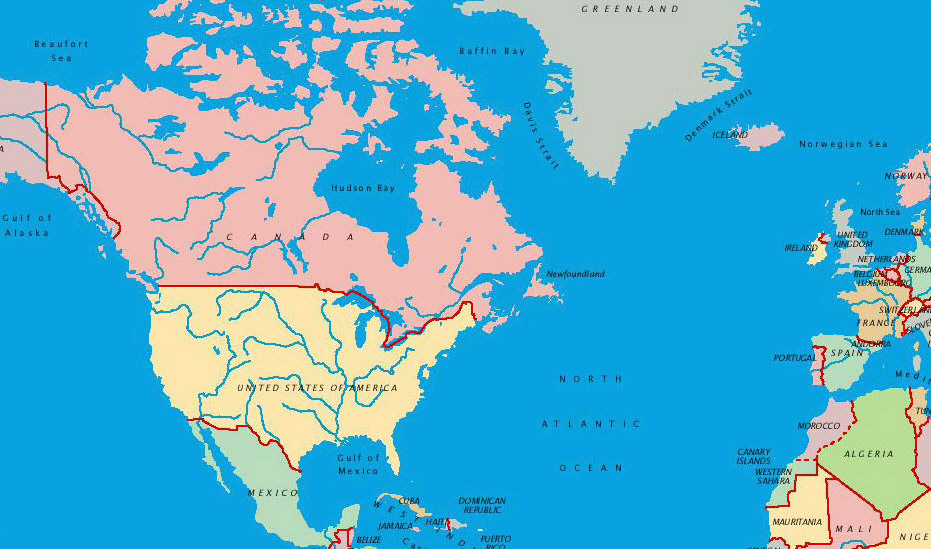
And here is a map of the world, just to get a little perspective (click the pic to zoom in).

World_pol_map cropped2

BC, at about 925,000 km2, is more than 10 times the size of Ireland at 70,000 km2. This works out to an average size of roughly 12,00 km2 per riding for BC, more than 7 times larger than Ireland’s constituencies (which are around 1,600 km2 in size). Yet despite the huge increase in riding size BC has way more women elected to representative government, exactly the opposite of the point Tieleman is trying to make in his Georgia Straight article.

It should be obvious that Bill Tieleman is not being very honest in presenting his point of view. It seems evident to me that he has not made his decision about BC-STV based on actual merit but has simply decided from the outset to take a stance against it, and then has just thrown any and all arguments out there with the goal of confusing or deceiving his readers. That should call into serious question his credibility as a commentator on this subject.

Back to Criticisms Mainpage.

Saturday, November 8, 2008

Criticism #2: BC-STV will lead to more minority governments.

This is another common argument presented that switching to BC-STV will lead to more minority governments, with critics trying to paint this apocalyptical picture of never-ending minorities mired in legislative stand-offs with political life being relegated to one long campaign as endless elections, being called every 6-12 months, usurp political discussion.

First off, I’ll start off by saying that, yes, there will be more minorities. And that’s how it should be; it’s pretty rare for a majority of the population to vote for a single party. So if a party only wins minority support in the ballot box, then it should likewise only win a corresponding minority of seats in the House or Legislature. Conversely, a party should be awarded a majority government only if the electorate wants one i.e. a majority of the electorate votes for that party. So when you think about it, the critics’ argument that FPTP is better because it produces more majorities is poor because it has to do so by misrepresenting the votes of the people.

But that’s not the only flaw in their argument. The critics’ assertion that switching to BC-STV will mean more elections because of more minority governments is based on the assumption that minorities under BC-STV will be as unstable as under FPTP. This isn’t true. In the Republic of Ireland, the average life of a minority in the last sixty years has been 3.7 years. Over the same time period Canada and BC, governments have lasted 3.15 and 3.55 years respectively (info courtesy of Antony Hodgson). And don't forget that we have had more majority governments. There is actually a page on the Elections Ireland website that lists the election years along the top. If you take a look, you see that elections actually happen relatively infrequently, with some minority governments even lasting as long as 5 years.

Why is this? Because there is a flaw, inherent to FPTP, that actually provides incentives for politicians to bring down minority governments sooner rather than later. Since STV addresses this flaw, the incentive is removed, leading to longer lasting minority governments.

This flaw, again, has to do with our FPTP system’s failure to produce proportional results; it simply is not cut out to deal with elections where there are more than 2 candidates. Because it is not able to account for vote splitting, margins of victory etc., you have these elections where small changes in the polls can lead to wildly skewed election results.

Let’s take our 2008 federal election as an example.

Stephen Harper and the Conservatives ended up winning 143 seats, a 15% increase from 2006, despite the fact that their share of the popular vote only increased by 1.3% (from 36.3% to 37.6%). On the flip side, Stephan Dion and the Liberals lost 27 seats, a 26% fall from 2006, even though they only dropped 4% in the polls. (wikipedia)

And this is why politicians call elections so frequently under minority governments. Because they know that small changes in public popularity can lead to huge swings in election results. So they wait until the political winds shift ever so slightly in their favour, and then bring down the government, hoping to capitalize on the windfall.

Mr. Harper called an early election for this very reason, banking that the polls would shift just enough to give him a majority. If the polls went in the other direction, you can bet it would be Mr. Dion working to bring down the government.

Now let’s take this scenario and apply it to the context of STV. Under STV, because it is proportional, a small increase in the polls would lead to.... only a small increase in seats won and visa versa. So the Conservatives 1.3% boon would only translate to about an extra 3-4 seats in the House; calling an election wouldn’t have really changed the look of parliament. The incentive has now been removed because public opinion usually doesn’t vary that much so politicians don’t have a reason to call an election since it’s not going to lead to a dramatic shift in power.

Back to Criticisms Mainpage.

Monday, October 27, 2008

Criticism #1: BC-STV is too complicated.

This is by far the most common argument presented against BC-STV and there is some truth to it in that BC-STV is more complicated than the First Past The Post (FPTP) system we use today. This is mostly due to the calculations involved in weighting transfer votes if they are derived from a winning candidate’s surplus votes (in order to adhere to the “one voter-one vote” rule). However, as explained in my “How Does BC-STV Work” post, the underlying principles of BC-STV are fairly straight forward and using it from a voter’s point of view is exceedingly simple. At the bare minimum, all you need to do is write a “1” by a candidate’s name. So all you’re doing is replacing an “X” with a “1”.

But critics will hammer on this point, hoping to scare citizens away from BC-STV despite all the evidence to the contrary.

Ireland has been using this system for 80 years. Scotland has recently used it for the first time in their last national election. Are the Irish and the Scots more intelligent than British Columbians? I don’t think so. But, that’s basically what the critics’ arguments boil down to. We British Columbians, apparently, do not have the mental capabilities of the Irish, Scots, Australians, New Zealanders, Maltans and yes, even Americans who have all used STV somewhere in their respective countries.

Heck, I even remember reading an article (I think it was in the Vancouver Sun) about BC-STV that came out just before the last referendum. It discussed how a teacher had taught her grade 6 class to vote using STV; they voted on what kind of pizza they wanted for lunch. In other words, and lets be very clear on this, this is a system of voting that 11 and 12 year old children have demonstrated an ability to utilize. Are you smarter than a 6th grader? I like to think so. Mr. Tieleman and his ilk do not.

But the fear mongering doesn’t stop there. In the run-up to the 2005 referendum, Tieleman wrote several articles in opposition to BC-STV, an example of one was written for the Georgia Straight in 2004. In it, he writes about how overwhelmingly confusing ballots would be under BC-STV:
“the number of candidates (in a seven member riding) would be staggering. If the B.C. Liberal, New Democrat, Unity, Green, Conservative, Reform, and Marijuana parties all ran full slates, there would be a minimum of 49 candidates. Then add any other parties and independents.”

Wow, sure sounds scary, doesn’t it? Fortunately, there’s this little thing called reality that gets in the way of their claims.

The thing is when you look at countries that use STV, political parties don’t automatically run full slates; they run the number of candidates depending on how many they expect to elect. So in a 7 member riding, a party like the Liberals or NDP would run only 3-4 candidates (Because they’d only get around 30-40% of the vote, they’d expect to win around 30-40% of the available seats). Small parties like the Green and Marijuana Parties would only run one because they don’t want to split the few votes that they have amongst their own candidates. So instead of having 49 candidates to choose from, as Tieleman would have you believe, based on the parties he listed you would have around 15 or so. (There is another website that tries to twist this fact as another false criticism of STV; I’ll address that as its own point).

You can actually see an example of an STV ballot used in the Irish General Election in 2002 (right click and hit "view image" to take a close-up look at the ballot). If you look closely, you’ll see that there are only 15 candidates listed for the 5-seat riding. Another example of an STV ballot from Australia can be found in wikipedia. In both examples, we find that the claim that voters will be “faced with a very large ballot and dozens of candidates in larger ridings, making it hard to rank the candidates knowledgeably” (knowstv.ca) is unfounded.

But this is a pretty common strategy of STV critics: dream up these wildly remote, hypothetical situations that never happen, hoping to scare people away from making a change.

Back to Criticisms Mainpage.

Sunday, October 19, 2008

What Are Some Criticisms Of BC-STV? (or Lies About BC-STV from Lying Liars Who Lie A Lot)

There are certain people out there who have taken the stance that British Columbians should not accept the Citizen’s Assembly’s recommendation to accept the Single Transferable Vote (BC-STV). Most of them seem to be from former political insiders or politicians, the most rabid opponent being Bill Tieleman who has his own website, knowstv.ca (get it? k-“no”-w STV? yuk, yuk, yuk, so clever). Incidentally, there is another blogger who has written an excellent rebuttal to Tieleman’s “factual” Q and A section of his website. In his blog post he, point-by-point, dismantles each and every criticism presented by Tieleman and shows the dishonesty inherent in the majority of these arguments.

Now, no one is claiming that BC-STV is perfect and there certainly are legitimate criticisms of it as a system of voting. Unfortunately, perhaps because legitimate concerns are few and hard to come by, the bulk of the arguments are largely derived from half truths, double standards, or just deliberate misrepresentations of the truth. So what are these claims? Let’s take a look at some of the major ones. This post is going to be quite long and I’m going to be adding to it as I go along, so each section will be treated as it’s own essay.

Links to Sections:

Criticism #1: BC-STV is too complicated.
Criticism #2: BC-STV will lead to more minority governments.
Criticism #3: BC-STV will mean less women getting elected.
Criticism #4: BC-STV will mean less accountability and representation from MLAs.
Criticism #5: BC-STV doesn't guarantee proportional results.
Clearing The Mists: A Response To A David Schreck Essay